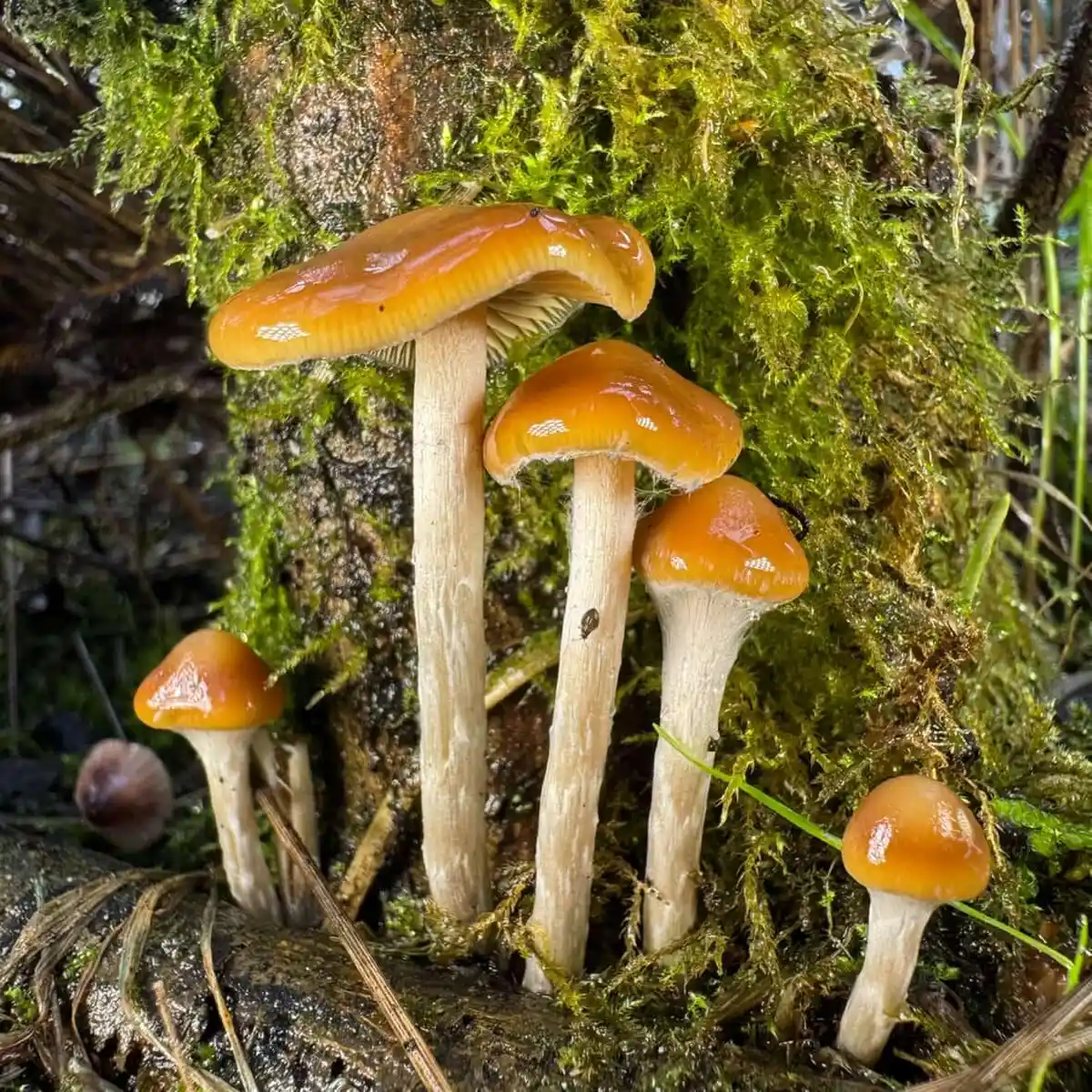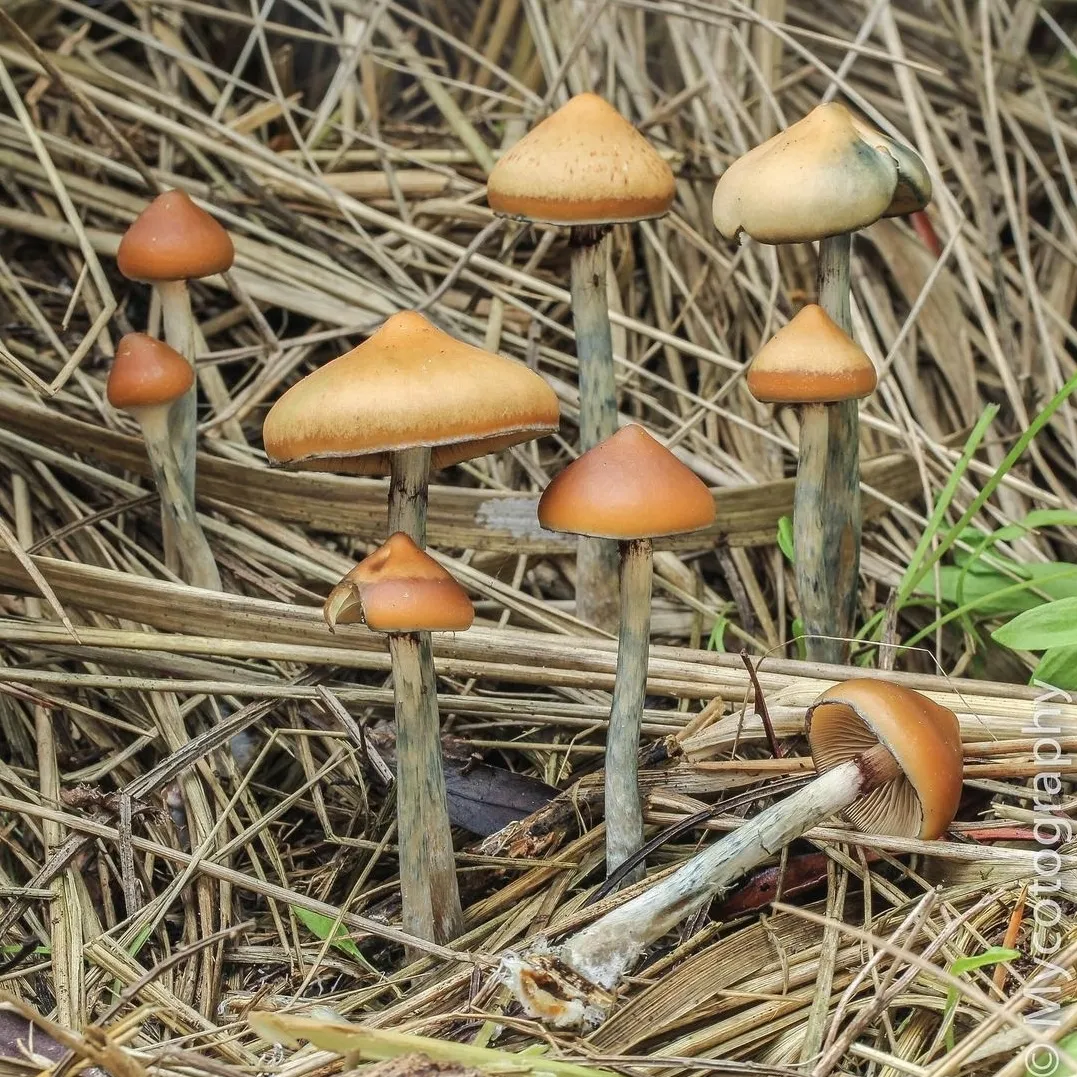
Psilocybe Allenii
Overview of Psilocybe allenii
Psilocybe Allenii is a wood-debris-associated species formally described in 2012 and named in honor of ethnomycologist John W. Allen.
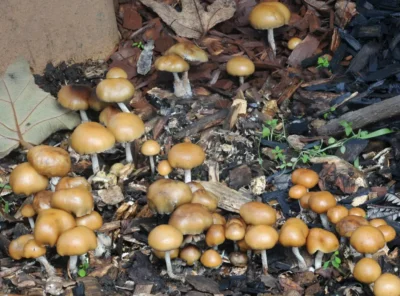
It is native to the Pacific Coast of North America and is most commonly observed in mulched landscaping beds and wood chip environments, particularly in California and the broader Pacific Northwest.
Prior to formal description, this species was frequently mistaken for Psilocybe cyanescens due to similar morphology and habitat preference.
Taxonomic History & Publication
Psilocybe allenii was formally described in:
Rockefeller, A., Allen, J.W., & Werner, P. (2012).
Psilocybe Allenii — A new species from the Pacific Coast of the United States. Mycotaxon.
The species was described by:
Alan Rockefeller
John W. Allen
Peter Werner
It was named in recognition of John W. Allen’s long-standing documentation of psilocybin-containing fungi worldwide.
The formal separation of P. allenii helped clarify distinctions within Pacific Coast woodlover populations previously grouped under P. cyanescens.


Habitat & Natural Range
Typical Habitat
Psilocybe Allenii is most commonly associated with:
– Wood chip landscaping beds
– Mulched garden environments
– Lignin-rich debris piles
– Urban and suburban green spaces
It is especially documented in:
– Northern California
– Coastal California
Pacific Northwest urban landscapes
Like other wood-associated species in the genus, it is saprotrophic and dependent on decomposing lignin-rich substrates.
Macroscopic Characteristics
Cap:
Caramel to chestnut-brown when moist
Hygrophanous, fading to lighter tan when dry
Often convex to broadly convex
May develop slight waviness but typically less dramatic than P. cyanescens
Stipe:
Slender to moderately robust
Whitish to pale tan
Strong blue bruising reaction when damaged
Bruising intensity can vary depending on age and environmental conditions.
Spore Print & Microscopy
The spore print of Psilocybe Allenii is dark purplish-brown, consistent with the genus.
Microscopically:
– Spores are smooth
– Ellipsoid to sub-ellipsoid
– Thick-walled
Typical of Psilocybe taxa

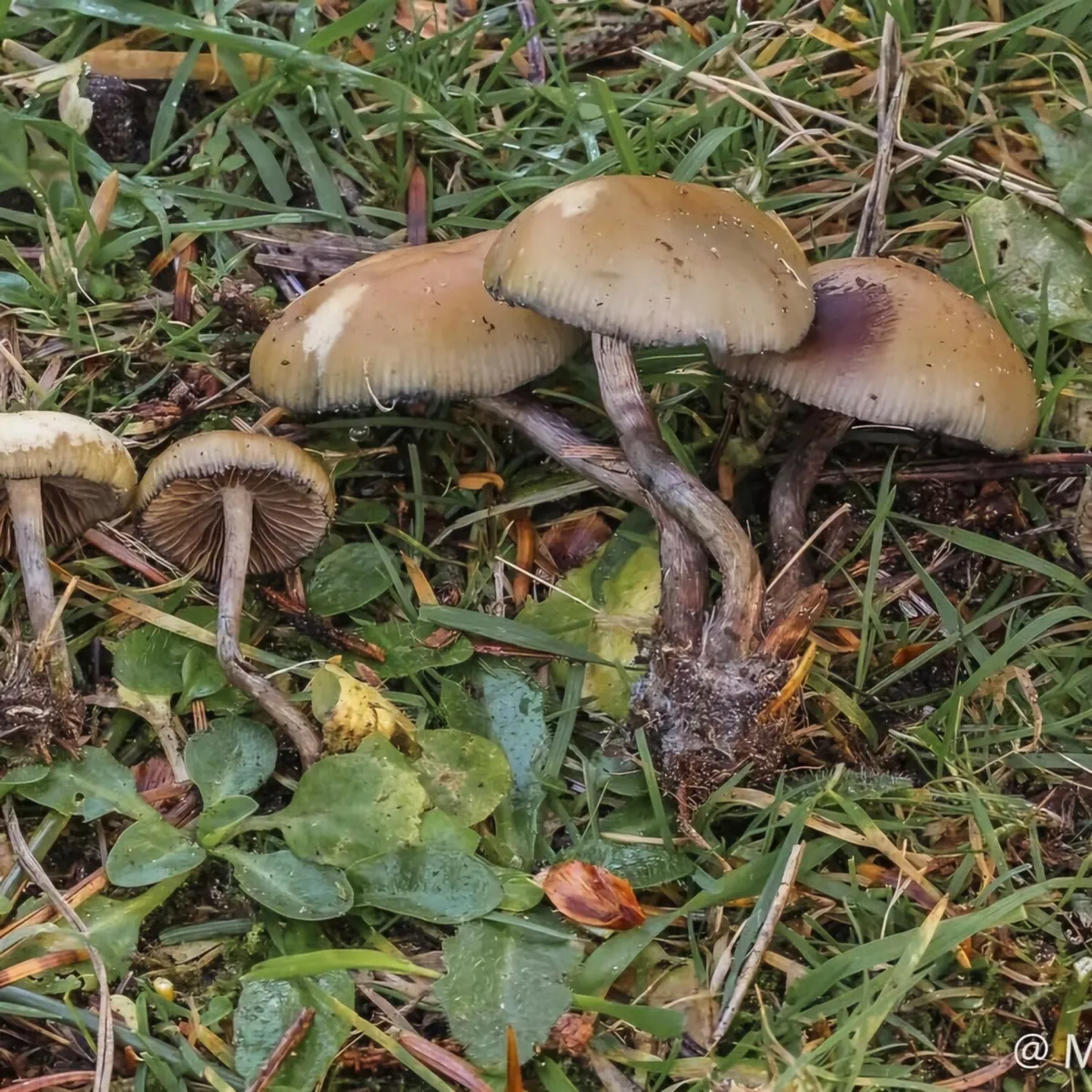
Psilocybe allenii Chemistry & Research Context
As with other members of the genus, Psilocybe Allenii contains psilocybin and psilocin, along with related indole alkaloids.
While not typically cited as having the highest reported alkaloid concentrations within the genus (as is often noted for P. azurescens), it remains chemically consistent with wood-debris-associated psilocybin-containing taxa.
The 2012 publication establishing the species focused primarily on morphological and taxonomic differentiation rather than extensive chemical quantification.
Further analytical work would be valuable for comparative alkaloid profiling within Pacific Coast woodlovers.