Mushroom Spore Syringes
Mushroom spore syringes are one of the most convenient formats for collecting, storing, and studying fungal spores. Each syringe contains microscopic spores suspended in sterile solution, allowing the specimen to remain contained, clearly labeled, and ready for microscopy or long-term collection.
At Basidium Equilibrium, our mushroom spore syringes are built around traceable genetics, careful laboratory handling, and more than a decade of work with fungal specimens. Our collection includes classic Psilocybe cubensis varieties, wild and landrace material, and documented genetics maintained through our broader Genetic Vault.
What Are Spore Syringes For?
Spore syringes are primarily used as a clean and convenient format for mushroom spore microscopy, taxonomy, specimen comparison, and collection. They are also a great choice for beginners because the spores are already contained in an aqueous solution and ready for microscopic study.
Under magnification, spores can reveal important characteristics including size, shape, pigmentation, wall structure, and other morphological differences. These features can be useful when comparing specimens or studying variation between species and genetic lines.
For a broader introduction to fungal spores, visit our Mushroom Spores guide, where we cover spore biology, microscopy, prints, swabs, and other specimen formats in greater detail.
What Do Mushroom Spore Syringes Look Like?
The appearance of a mushroom spore syringe can vary considerably depending on the species and the natural pigmentation of the spores.
Some syringes may appear nearly clear until examined closely, while others contain visible clusters, suspended particles, or obvious clouds of spores within the solution. Different varieties can also behave differently once added to our aqueous solution. Some spores readily form visible clumps, while others disperse into a finer, dustier suspension.
The appearance of the solution alone does not determine the quality of a specimen. Many of the characteristics used to examine and compare spores are microscopic and cannot be accurately evaluated without magnification.
Comparing different spore specimen formats, including syringes, prints, swabs, and prepared slides, can also be useful for collectors interested in fungal morphology.
How Does Basidium Equilibrium Prepare Spore Syringes?
Basidium Equilibrium brings more than a decade of hands-on work with mushroom spores, fungal genetics, microscopy specimens, and laboratory processes to the preparation of our products.
We place particular importance on both specimen quality and history. Whenever possible, the spores used in our syringes are connected to documented source material, known lineage information, breeder history, or collection records rather than simply being assigned a commercial name.
Our laboratory environment uses laboratory-grade filtration, controlled preparation practices, and routine product testing as part of our quality-control process.
Spore Syringe vs. Isolated Spore Syringe
Traditional spore syringes and Isolated Spore Syringes represent two different specimen categories within the Basidium Equilibrium collection.
A traditional mushroom spore syringe contains a population of spores collected from a fungal specimen.
Isolated spore products are associated with selected genetic lines that have been documented and maintained separately within our collection. These products are particularly useful for collectors interested in Liquid Culture and selected genetic material.
If you are specifically looking for selected or documented genetic lines, browse our Isolated Spore Syringes collection.
Why Does Genetic History Matter?
A strain name by itself does not always tell the full story of a specimen.
Many mushroom varieties have circulated for years through different collectors, laboratories, breeders, and geographic regions. Over time, selections can diverge, phenotypes can change, and distinctly different genetic expressions may continue circulating under the same commercial name.
That history matters to us.
Basidium Equilibrium documents what we know about the specimens in our collection whenever that information is available. This can include origin, breeder history, phenotype, species, geographic collection data, and lineage.
Our Genetic Vault contains deeper profiles on many of these varieties and species, preserving their history, morphology, genetic relationships, and known origins in one place.
How Should Spore Syringes Be Stored?
Mushroom spore syringes should be protected from excessive heat, direct sunlight, and unnecessary temperature fluctuations.
For best results, keep spore syringes in a cool, dark place. Stable cool storage is generally preferable for longer-term specimen preservation, while different spore formats may offer different advantages for archival collection.
For a more detailed discussion of storing syringes, prints, swabs, and other specimens, see our Mushroom Spore Storage Guide.
What Is the Difference Between a Spore Syringe, Spore Print, and Spore Swab?
Each format provides a different way to collect and preserve mushroom spores.
Spore syringes contain spores suspended in sterile solution and provide a convenient, contained specimen for microscopy.
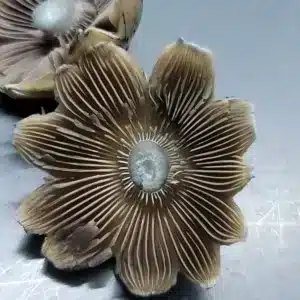
Spore prints preserve a visible deposit of spores collected onto a clean surface and are particularly useful for archival collections and observing natural spore color.
Spore swabs collect spores onto a sterile swab and are often used when a specimen produces only a limited visible print or when direct collection is preferable.
Prepared microscope slides provide another option for collectors who want a specimen already mounted for direct observation.
The best format ultimately depends on what you want to study, preserve, or document.
The Basidium Standard: Traceable Mushroom Genetics
A name on a syringe should mean more than a label.
The Basidium Standard is our commitment to specimen quality, traceability, laboratory handling, and the preservation of mushroom genetic history. After more than a decade working with fungal genetics, we have built our collection around knowing as much as possible about where a specimen came from, how it was maintained, and the people or collections connected to its history.
Whenever possible, our mushroom spores are supported by lineage information maintained through the Genetic Vault. This allows us to preserve breeder attribution, collection history, phenotype information, species identification, and other records that can easily disappear as genetics move from one collection to another.
Traceable Genetics
Whenever provenance is available, we document the known source, lineage, breeder, collection, or history associated with a specimen.
Laboratory Standards
Our mushroom spore products are prepared using controlled laboratory practices, laboratory-grade filtration, and routine quality testing developed through more than a decade of hands-on work.
Genetic Documentation
The Genetic Vault preserves the history and characteristics of important varieties and species rather than treating a commercial strain name as the end of the story.
Responsible Sourcing
We place value on knowing where genetic material originated and giving proper attribution when that history is known.
Long-Term Preservation
Rare, wild, historic, and unusual mushroom genetics can disappear surprisingly quickly. Maintaining documented specimens helps preserve those lineages for microscopy, taxonomy, collection, and future study.
For us, being a trusted source for mushroom genetics means more than maintaining inventory. It means maintaining the history behind the specimens as carefully as we maintain the specimens themselves.