Psilocybe Azurescens
Overview of Psilocybe azurescens
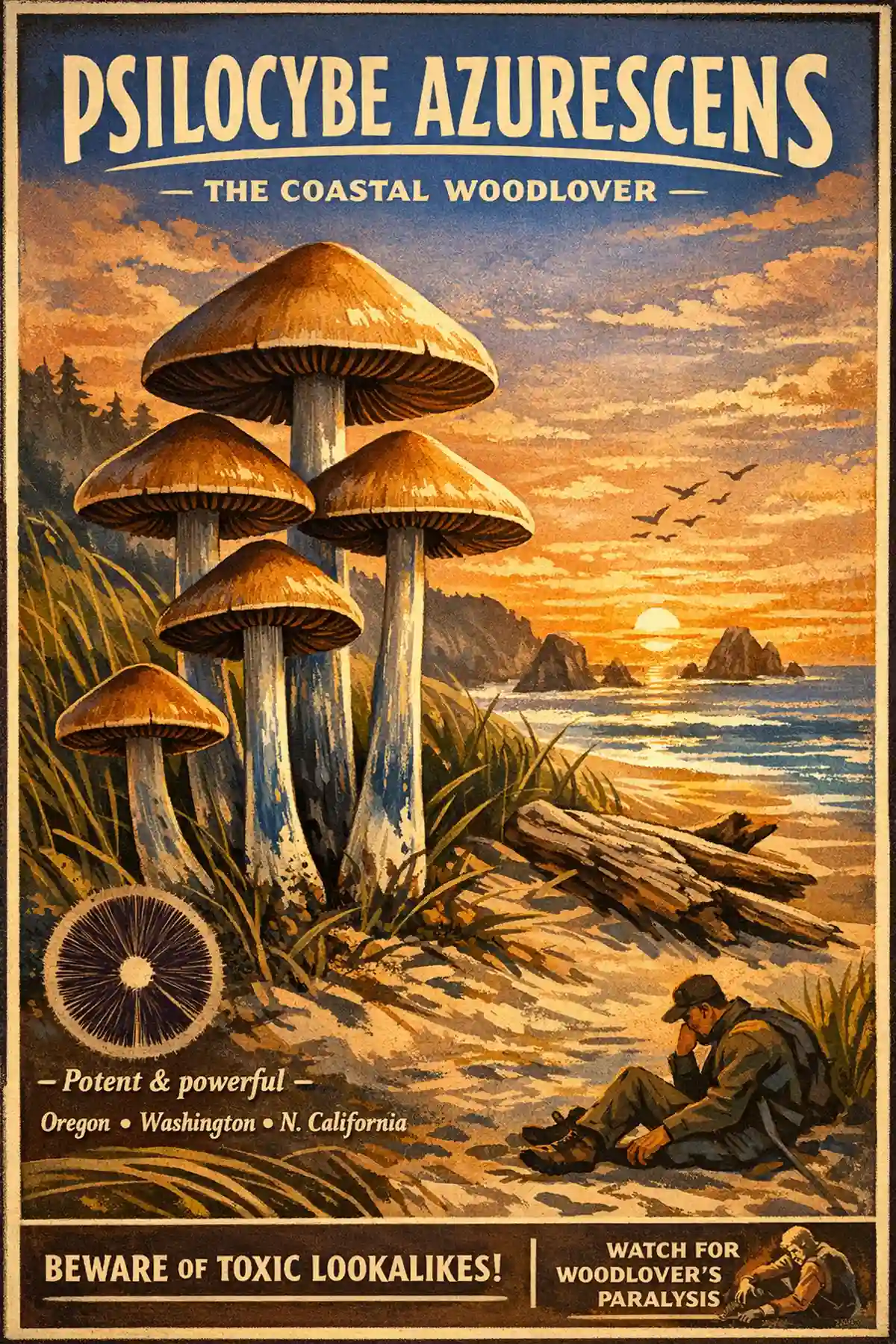
Psilocybe azurescens is a coastal wood-associated species known for its strong blue bruising response, tall stature, and smooth caramel-brown cap. Native primarily to the Pacific Northwest of the United States, it has become one of the most studied woodloving species in the genus due to its ecological specialization and reported alkaloid concentrations.
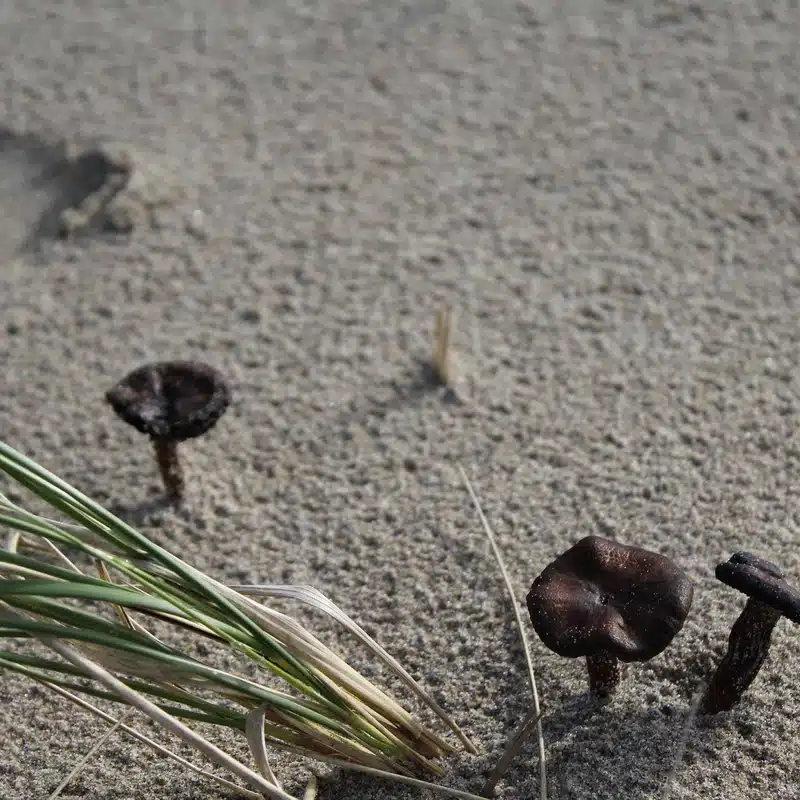
Often found in dune grasses near buried driftwood, this species occupies a unique ecological niche compared to more commonly encountered mulched-bed woodlovers.
Habitat & Natural Range
Psilocybe azurescens is most frequently documented in:
Coastal dune systems
Sandy soils enriched with buried wood debris
Grass-covered bluffs
Driftwood-rich environments
Primary recorded regions include:
Oregon
Washington
Northern California
The species appears strongly tied to cool, moist autumn conditions and lignin-rich substrates concealed beneath sand and grasses.
Macroscopic Characteristics
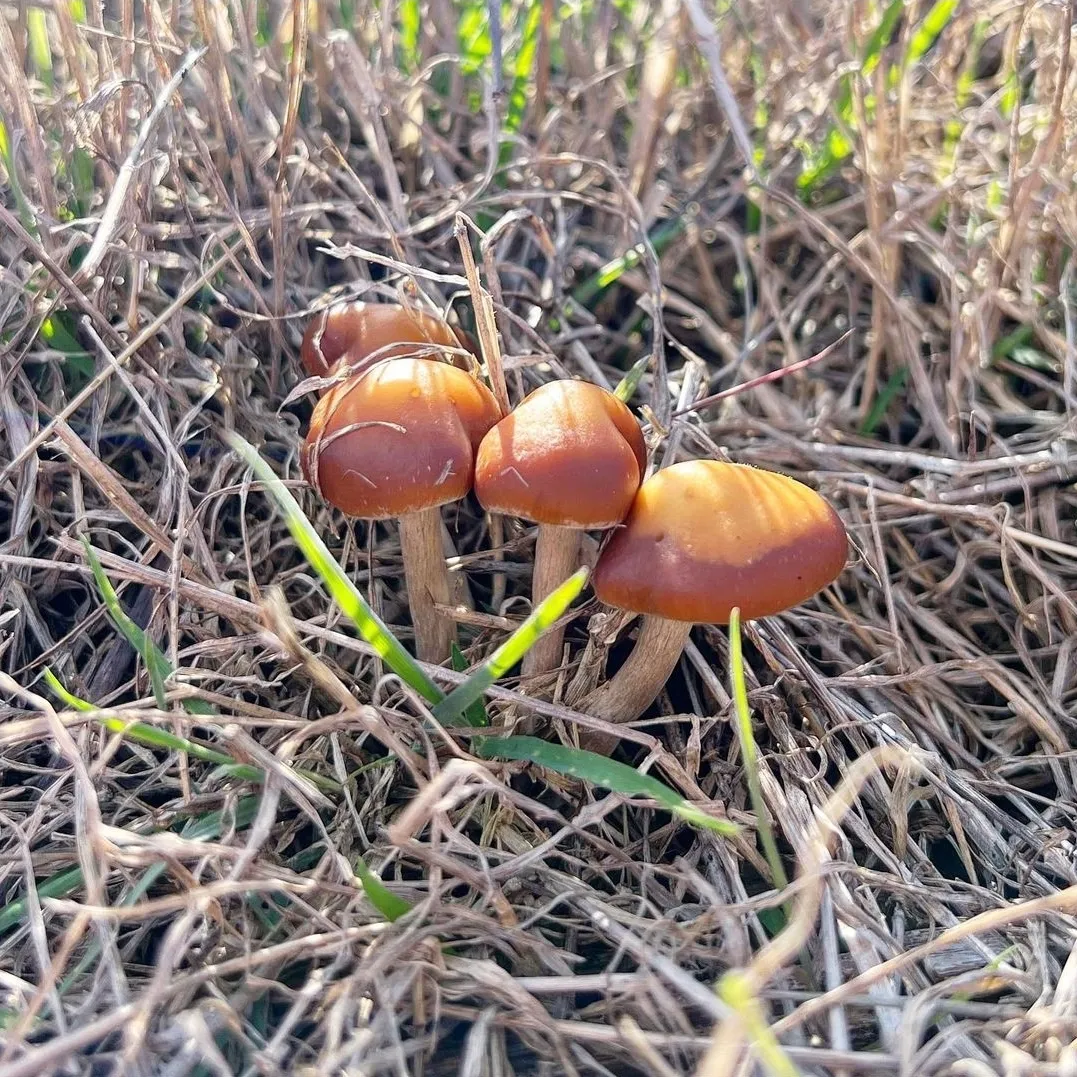
Cap:
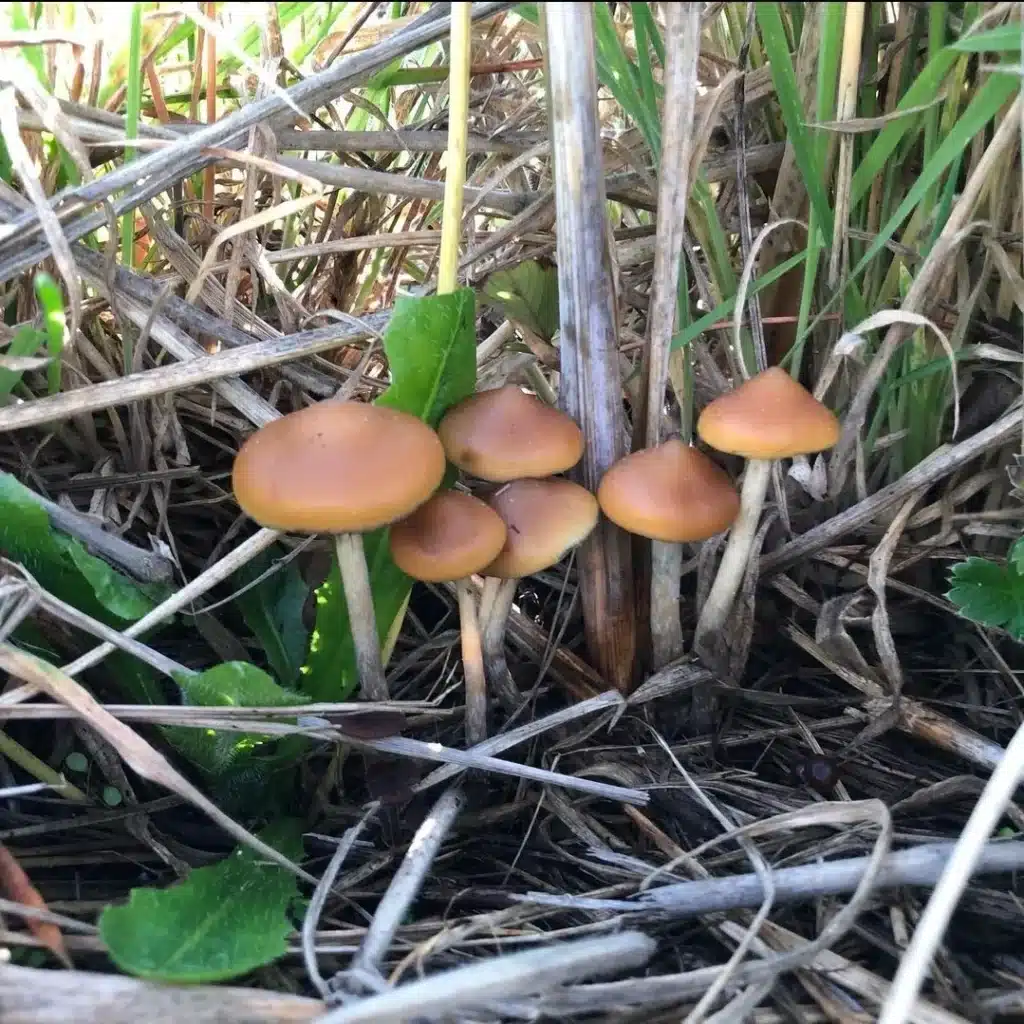
Smooth caramel to chestnut-brown when moist
Hygrophanous, fading lighter as it dries
Slightly viscid in damp conditions
Often symmetrical with less waviness than P. cyanescens
Stipe:
Tall and well-defined
Whitish to pale tan
Strong blue bruising reaction when handled
The blue oxidation response is typically rapid and pronounced.
Spore Print & Microscopy
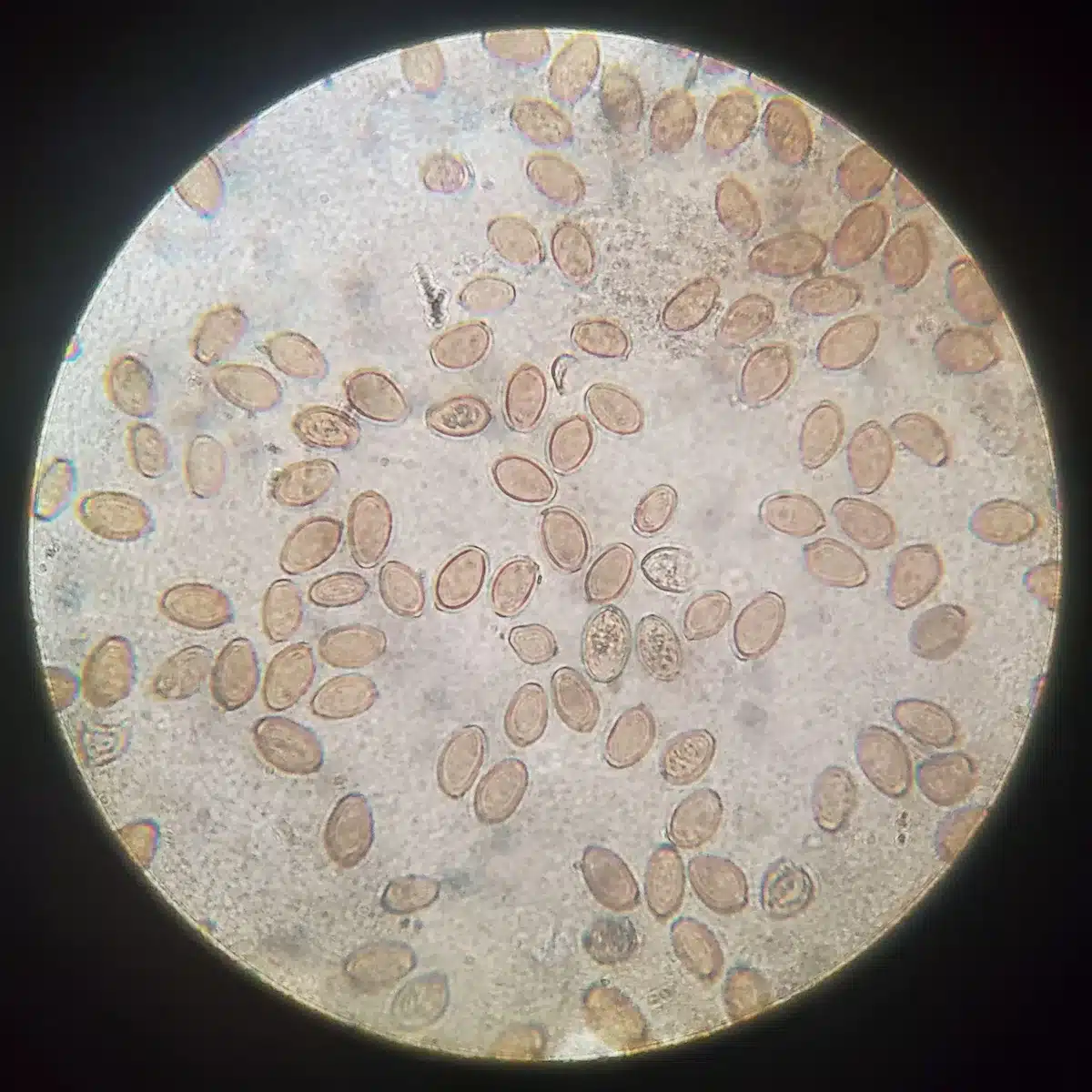
The spore print is dark purplish-brown, consistent with the genus Psilocybe.
Microscopically, spores are elliptical to sub-elliptical and smooth. Accurate identification relies on combining spore characteristics with ecological and macroscopic traits.
Chemistry & Research Context
Published analyses have reported that Psilocybe azurescens demonstrates relatively high concentrations of psilocybin and psilocin compared to many other members of the genus.
Alkaloid expression varies depending on:
– Substrate
– Environmental conditions
– Genetics
– Developmental stage
Modern chromatographic analysis remains the most accurate method for compound verification and comparison.
Woodlover’s Paralysis
A phenomenon sometimes associated with coastal woodloving species is commonly referred to as “woodlover’s paralysis.”
This temporary motor impairment has been described in anecdotal and limited observational reports. Its mechanism remains unclear and warrants further biochemical and neurological research.
Proposed areas of investigation include:
– Alkaloid synergy
– Presence of lesser-studied compounds
– Neuromuscular receptor interaction
– Environmental influence on secondary metabolites
This highlights the importance of continued research within the genus.
Safety & Lookalikes
Small brown mushrooms in wood-rich or coastal environments can resemble toxic species.
Particular caution is warranted with:
– Galerina species (rusty-brown spore print, toxic)
Spore color, bruising response, and ecological context are critical distinguishing features. Identification should always rely on multiple characteristics rather than a single trait.
Comparison to Psilocybe Cyanescens
While both species are wood-associated and bruise blue:
|
Trait
|
Psilocybe azurescens
|
Psilocybe cyanescens
|
|---|---|---|
|
Habitat |
Coastal dunes & driftwood |
Mulched beds & wood chips |
|
Cap Margin |
Smooth to slightly irregular |
Distinctly Wavy |
|
Stature |
Taller, more upright |
Lower, broader caps |
Final Thoughts
Psilocybe azurescens represents a highly specialized coastal species within the genus — elegant in form, selective in habitat, and chemically notable in modern literature.
Its ecological specificity and reported alkaloid profile continue to make it a subject of scientific and taxonomic interest.