25% OFF USE CODE BAS25 AT CHECKOUT

Mushroom Spore Syringes for Sale | Basidium Equilibrium

Showing 1–16 of 31 results

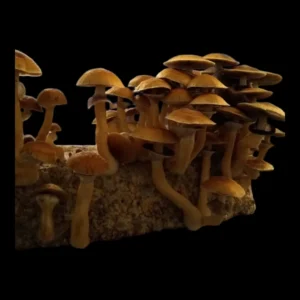
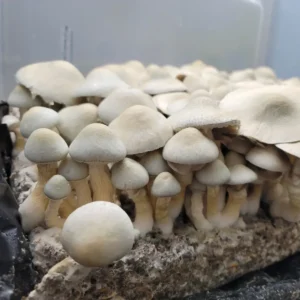
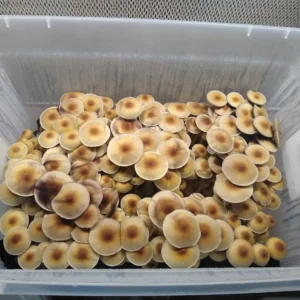
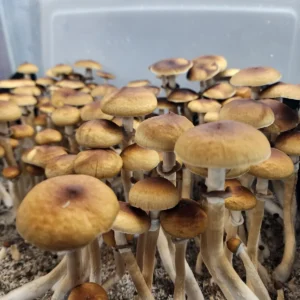
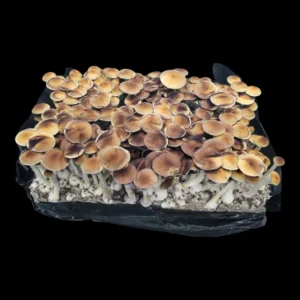
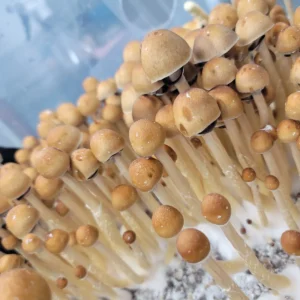
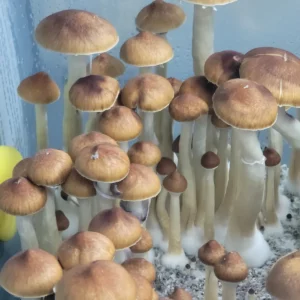
  • Amazon Cubensis mushrooms on substrate, featuring iconic brown caps and purple spore prints forming beneath the clusterGroup of Amazon Cubensis mushrooms in varying stages of growth, with classic brown caps and visible spore deposits.

    Amazon Spore Syringe

    $18.98

    Amazon Spore Syringe

    The Amazon strain, also known as Amazonian, is one of the most well-known legacy Psilocybe cubensis strains, deeply embedded in mycology history. Thought to have originated from Terence McKenna’s journeys through the Amazon rainforest, this strain was later commercially distributed in the 1990s.

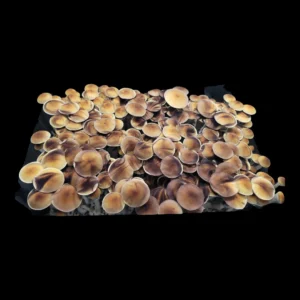
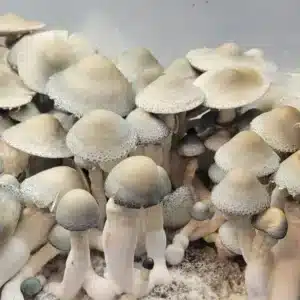
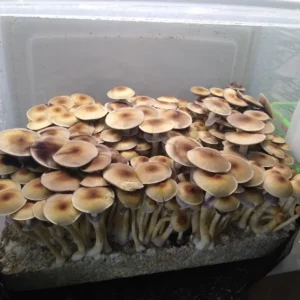
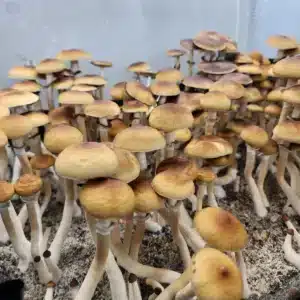
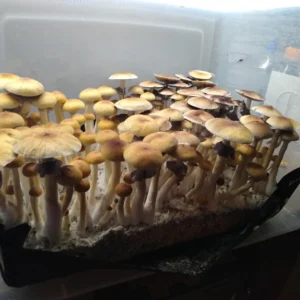
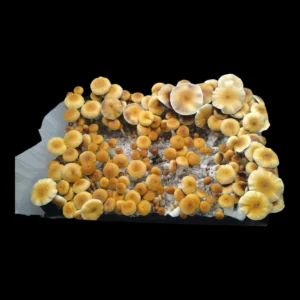
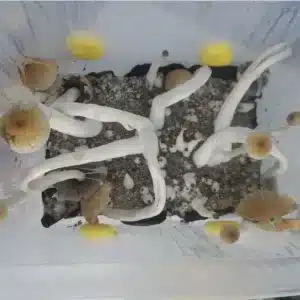
  • Cluster of B+ mushrooms with classic brown caps and white stems, growing in a controlled environment.Side view of B+ mushrooms highlighting the gradient of brown on the caps and their firm white stems.

    B+ Spore Syringe

    $18.98

    Classic B+ spore syringe known for its reliability and ease of observation. A dependable choice for microscopy and sample collection, suitable for both beginners and experienced collectors.

    ⚠ Spores are intended for microscopy, taxonomy, and novelty purposes only.

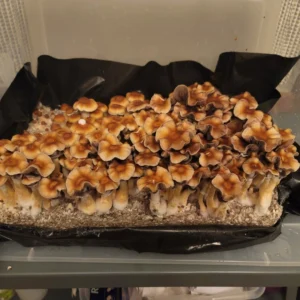
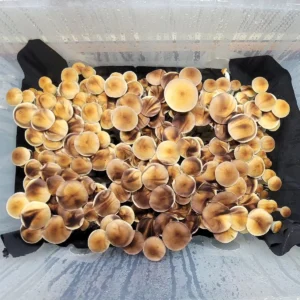
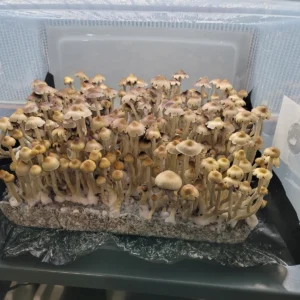
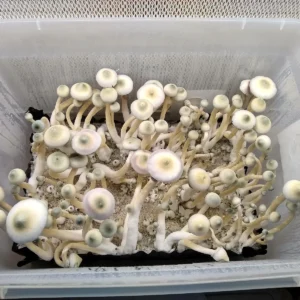
  • Light blue BAPER rust flushing on cake with a lot of fruits showing off it vigor and Beauty.BAPER RUST Psilocybe cubensis fruiting body with large sky-blue cap and stout stem

    BAPER Rust – Spore Syringe

    $18.98

    BAPER Rust is a rust-spored spore lineage documented by Basidium Equilibrium, noted for broad lamellae and consistent macromorphology. Prepared as a spore syringe for microscopy and taxonomy.

    ⚠ Spores are intended for microscopy, taxonomy, and novelty purposes only.

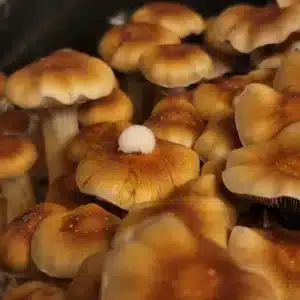
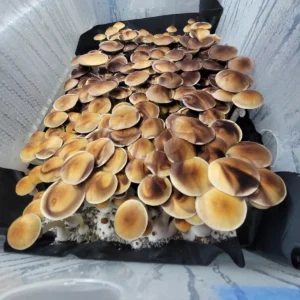
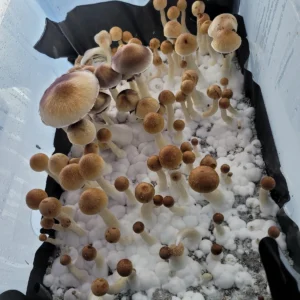
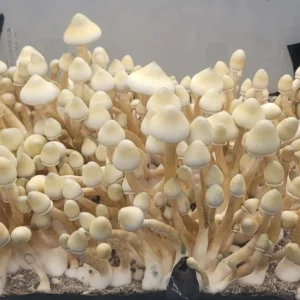
  • Blue Magnolia Psilocybe cubensis isolated spore syringe, classic brown caps with strong spore production and prolific flush potential.Blue Magnolia isolated spore syringe highlighting strong flushes, medium to large gill formation, and microscopically productive purple spores.

    Blue Magnolia Spore Syringe

    $18.98

    The Blue Magnolia strain is a visually striking Psilocybe cubensis, known for its full canopy formations and potential for large cap development. This variety exhibits strong sporulation, making it a great addition to any mycology research collection.

  • Psilocybe cubensis Blue Meanie spore syringe with robust growth potential and naturally productive spores for collectors and mycology enthusiasts.Blue Meanie spore syringe capturing the distinct appearance and resilient genetics of this classic Psilocybe cubensis strain.

    Blue Meanie Spore Syringe

    $18.98

    Blue Meanie Spore Syringe

    Blue Meanie is one of the most recognizable names in the Psilocybe cubensis world, celebrated for its vigorous growth traits and classic appearance. Known for producing medium to large fruiting bodies with rich golden-brown caps and sturdy stems, this variety has long held a place in spore collectors’ libraries.

  • Close-up of Cabo Rojo mushroom spores, natural brown caps with rich purple spore color.Cabo Rojo isolated spore syringe with natural brown Psilocybe cubensis caps and purple spores.

    Cabo Rojo Spore Syringe

    $18.98

    The Cabo Rojo strain is a wild Psilocybe cubensis discovered in the grazing pasturelands of Cabo Rojo, Puerto Rico. This area is rich in biodiversity, including mangrove forests, salt flats, and wetlands within the National Wildlife Refuge. Alongside rare birds such as the endangered brown pelican and Caribbean coot, the region supports a thriving fungal ecosystem, making it ideal for wild mushroom diversity.

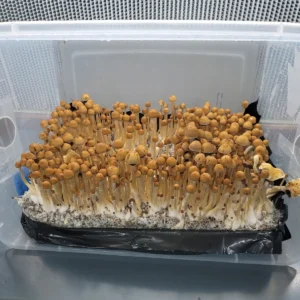
  • A unique rust spore producing Cambodian mushroom. With orange to gold colored caps. And very skinny stems.Microscopy-ready spore print of Cambodian Rust, showing rust-brown spores from skinny-stemmed mushrooms with bright orange to golden caps

    Cambodian Rust – Spore Syringe

    $18.98

    Cambodian cubensis a very well domesticated classic Cubensis hails from the northwest Cambodia region. Rumored to have been retrieved by an anonymous Mycologist in the foothills of the second largest city in Cambodia, Krong Siem Reap near Angkor Wat. Angkor Wat is the largest religious complex on the planet.

    No surprise to mushroom enthusiasts the significance of these occurrences. Cambodian is a large bulbous shaped mushroom, with brown caps and tan stems.

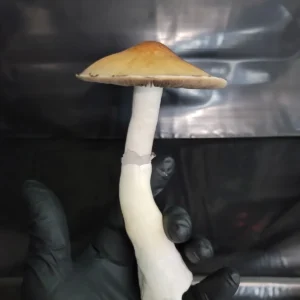
  • Cluster of tall, wild Debaryi cubensis mushrooms, highlighting their characteristic brown caps and elongated white stems.Florida wild Psilocybe cubensis Debaryi, growing tall with broad brown caps and traditional stem structure.

    Debary – Spore Syringe

    $18.98

    Wild, Found in Debary, Florida is a beautiful natural cubensis strain.  This is a first-generation spore from wild landrace variety. 

    Read moreLoading Done
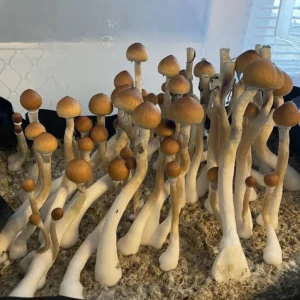
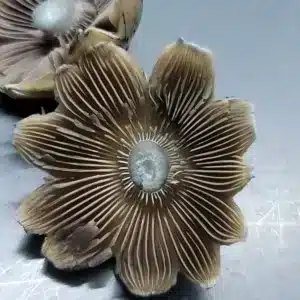
  • Tall, slender E4K Psilocybe cubensis fruiting bodies with light brown, flower-like caps, ideal for microscopic observationUnique E4k cap that looks like a flower with the cap having tears in it that resemble petals from a flower.

    E4K Spore Syringe

    $18.98

    The E4K strain, also known as Extraterrestrial of the Fourth Kind, is a visually stunning and rare Psilocybe cubensis variety. First discovered by Willy Myco & TKK in Texas, this strain is recognized for its exceptional height and unique flower-like caps, which elegantly unfurl into distinct petals as they mature.

  • Golden Teacher Psilocybe cubensis with iconic golden-brown caps and sturdy pale stems.Golden Teacher cubensis, a widely recognized strain with timeless morphology and strong sporulation.

    Golden Teacher Spore Syringe

    $18.98

    Golden Teacher (GT) – Spore Syringe has its roots in mid to early 90’s Golden Teacher. Known for consistent, robust fruiting, striking blonde caps and stems, and abundant spore production, GT welcomes mycology enthusiasts. This multi spore culture, from 2016’s legacy spores, invites you on a fascinating journey of phenotypic exploration.

  • Yellow-capped, small Goldilocks Psilocybe cubensis fruiting bodies, Arkansas wild type.Light brown Goldilocks Psilocybe cubensis with spore deposit, distinctive hybrid look.

    Goldilocks Spore Syringe

    $18.98

    Goldilocks | A Newly Domesticated Landrace from Arkansas

    The Goldilocks strain is a wild-origin Psilocybe cubensis, first discovered in Arkansas and domesticated in 2024 by Psilovibe. This strain remains only one generation removed from the wild.

  • Hawaiian Psilocybe cubensis with classic brown cap and slender pale stem.

    Hawaiian – Spore Syringe

    $18.98

    Hawaiian has distinct features, from its captivating looks to its natural spore productivity, make it a top pick for mycology enthusiasts. It offers a glimpse into the diverse, resilient world of mushrooms. Hawaiian encourages you to uncover nature’s genetic mysteries.

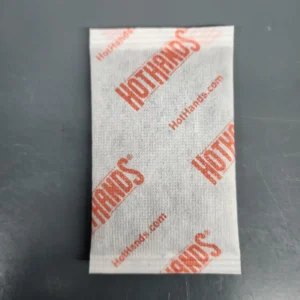
  • Heat pack for syringes to keep them warm in extreme weather.

    Heat Pack for Spores

    $2.00

    Keep spore syringes safe in winter! Add a heat pack for shipping to regions under 35°F. Prevent freezing and preserve quality.

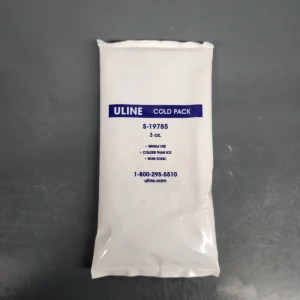
  • Ice pack for keeping spores cool in summer months.

    Ice Cooling Pack

    $2.00

    Protect spore syringes from summer heat! Add an Ice Cooling Pack to your order to ensure quality during transit over 80°F. Highly recommended.

  • Close-up of Jedi Mind Fuck mushroom showing early-breaking veil and medium gills.Side view of JMF fruiting body showing slender stipe and chestnut brown cap with rippled edges.

    Jedi Mind Fuck Spore Syringe

    $18.98

    Jedi Mind Fuck Spore Syringe | A Bold & Towering Psilocybe Cubensis

    The Jedi Mind Fuck (JMF) strain is a highly regarded Psilocybe cubensis variety, first discovered in Mid-East Florida around 2009 by citizen scientist Myco Joe. It quickly gained attention in the mycology community for its exceptional height, large umbonate caps, and remarkable genetic stability.

  • Leucistic A+ Psilocybe cubensis spore syringe showing off-white mushroom traits with deep purple spores for microscopy and research.Psilocybe cubensis Leucistic A+ spore syringe with dark purple spores and strong colonization potential, ideal for microscopic observation.

    Leucistic A+ – Spore Syringe

    $18.98

    The Leucistic A+ strain is a striking variation of Albino A+, displaying pale, off-white pigmentation while retaining strong spore production. Unlike true albino mutations, L. A+ produces deep purple spores, making it an ideal specimen for microscopic study.

Mushroom Spore Syringes

Mushroom spore syringes are one of the most convenient formats for collecting, storing, and studying fungal spores. Each syringe contains microscopic spores suspended in sterile solution, allowing the specimen to remain contained, clearly labeled, and ready for microscopy or long-term collection.

At Basidium Equilibrium, our mushroom spore syringes are built around traceable genetics, careful laboratory handling, and more than a decade of work with fungal specimens. Our collection includes classic Psilocybe cubensis varieties, wild and landrace material, and documented genetics maintained through our broader Genetic Vault.


What Are Spore Syringes For?

Spore syringes are primarily used as a clean and convenient format for mushroom spore microscopy, taxonomy, specimen comparison, and collection. They are also a great choice for beginners because the spores are already contained in an aqueous solution and ready for microscopic study.

Under magnification, spores can reveal important characteristics including size, shape, pigmentation, wall structure, and other morphological differences. These features can be useful when comparing specimens or studying variation between species and genetic lines.

For a broader introduction to fungal spores, visit our Mushroom Spores guide, where we cover spore biology, microscopy, prints, swabs, and other specimen formats in greater detail.


What Do Mushroom Spore Syringes Look Like?

The appearance of a mushroom spore syringe can vary considerably depending on the species and the natural pigmentation of the spores.

Some syringes may appear nearly clear until examined closely, while others contain visible clusters, suspended particles, or obvious clouds of spores within the solution. Different varieties can also behave differently once added to our aqueous solution. Some spores readily form visible clumps, while others disperse into a finer, dustier suspension.

The appearance of the solution alone does not determine the quality of a specimen. Many of the characteristics used to examine and compare spores are microscopic and cannot be accurately evaluated without magnification.

Comparing different spore specimen formats, including syringes, prints, swabs, and prepared slides, can also be useful for collectors interested in fungal morphology.


How Does Basidium Equilibrium Prepare Spore Syringes?

Basidium Equilibrium brings more than a decade of hands-on work with mushroom spores, fungal genetics, microscopy specimens, and laboratory processes to the preparation of our products.

We place particular importance on both specimen quality and history. Whenever possible, the spores used in our syringes are connected to documented source material, known lineage information, breeder history, or collection records rather than simply being assigned a commercial name.

Our laboratory environment uses laboratory-grade filtration, controlled preparation practices, and routine product testing as part of our quality-control process.


Spore Syringe vs. Isolated Spore Syringe

Traditional spore syringes and Isolated Spore Syringes represent two different specimen categories within the Basidium Equilibrium collection.

A traditional mushroom spore syringe contains a population of spores collected from a fungal specimen.

Isolated spore products are associated with selected genetic lines that have been documented and maintained separately within our collection. These products are particularly useful for collectors interested in Liquid Culture and selected genetic material.

If you are specifically looking for selected or documented genetic lines, browse our Isolated Spore Syringes collection.


Why Does Genetic History Matter?

A strain name by itself does not always tell the full story of a specimen.

Many mushroom varieties have circulated for years through different collectors, laboratories, breeders, and geographic regions. Over time, selections can diverge, phenotypes can change, and distinctly different genetic expressions may continue circulating under the same commercial name.

That history matters to us.

Basidium Equilibrium documents what we know about the specimens in our collection whenever that information is available. This can include origin, breeder history, phenotype, species, geographic collection data, and lineage.

Our Genetic Vault contains deeper profiles on many of these varieties and species, preserving their history, morphology, genetic relationships, and known origins in one place.


How Should Spore Syringes Be Stored?

Mushroom spore syringes should be protected from excessive heat, direct sunlight, and unnecessary temperature fluctuations.

For best results, keep spore syringes in a cool, dark place. Stable cool storage is generally preferable for longer-term specimen preservation, while different spore formats may offer different advantages for archival collection.

For a more detailed discussion of storing syringes, prints, swabs, and other specimens, see our Mushroom Spore Storage Guide.


What Is the Difference Between a Spore Syringe, Spore Print, and Spore Swab?

Each format provides a different way to collect and preserve mushroom spores.

Spore syringes contain spores suspended in sterile solution and provide a convenient, contained specimen for microscopy.

Spore prints preserve a visible deposit of spores collected onto a clean surface and are particularly useful for archival collections and observing natural spore color.

Spore swabs collect spores onto a sterile swab and are often used when a specimen produces only a limited visible print or when direct collection is preferable.

Prepared microscope slides provide another option for collectors who want a specimen already mounted for direct observation.

The best format ultimately depends on what you want to study, preserve, or document.


The Basidium Standard: Traceable Mushroom Genetics

A name on a syringe should mean more than a label.

The Basidium Standard is our commitment to specimen quality, traceability, laboratory handling, and the preservation of mushroom genetic history. After more than a decade working with fungal genetics, we have built our collection around knowing as much as possible about where a specimen came from, how it was maintained, and the people or collections connected to its history.

Whenever possible, our mushroom spores are supported by lineage information maintained through the Genetic Vault. This allows us to preserve breeder attribution, collection history, phenotype information, species identification, and other records that can easily disappear as genetics move from one collection to another.

Traceable Genetics

Whenever provenance is available, we document the known source, lineage, breeder, collection, or history associated with a specimen.

Laboratory Standards

Our mushroom spore products are prepared using controlled laboratory practices, laboratory-grade filtration, and routine quality testing developed through more than a decade of hands-on work.

Genetic Documentation

The Genetic Vault preserves the history and characteristics of important varieties and species rather than treating a commercial strain name as the end of the story.

Responsible Sourcing

We place value on knowing where genetic material originated and giving proper attribution when that history is known.

Long-Term Preservation

Rare, wild, historic, and unusual mushroom genetics can disappear surprisingly quickly. Maintaining documented specimens helps preserve those lineages for microscopy, taxonomy, collection, and future study.

For us, being a trusted source for mushroom genetics means more than maintaining inventory. It means maintaining the history behind the specimens as carefully as we maintain the specimens themselves.