The Forgotten Chemistry of Psilocybe Mushrooms
Why the Mushroom May Be More Than Just Psilocybin
For decades, the conversation around psychedelic mushrooms has been narrowed down to a single word: psilocybin.
Today, that narrowing has accelerated even further.
Chocolate bars, gummies, capsules, canned drinks, and brightly colored “mushroom” products now flood the market. Most are marketed around isolated or synthesized psilocybin compounds rather than the mushroom itself. Somewhere along the way, the conversation shifted from studying a complex living organism to reducing the experience down to one extracted molecule.
But the fungal community has been asking an important question for years:
What if psilocybin is only part of the story?
While universities and pharmaceutical companies move through slow clinical pipelines and regulatory frameworks, independent researchers, cultivators, analytical chemists, and underground mycology communities have quietly continued studying the broader chemistry of Psilocybe and Panaeolus mushrooms at a remarkable pace.
And what they are finding is increasingly difficult to ignore.
Beyond Psilocybin
Psilocybin-producing mushrooms contain far more than psilocybin alone.
Modern full-spectrum alkaloid analysis is revealing a growing list of naturally occurring tryptamine compounds and secondary metabolites, including:
- Baeocystin
- Norbaeocystin
- Aeruginascin
- Norpsilocin
- Psilocin
- Beta-carbolines
- Additional unidentified metabolites still being studied
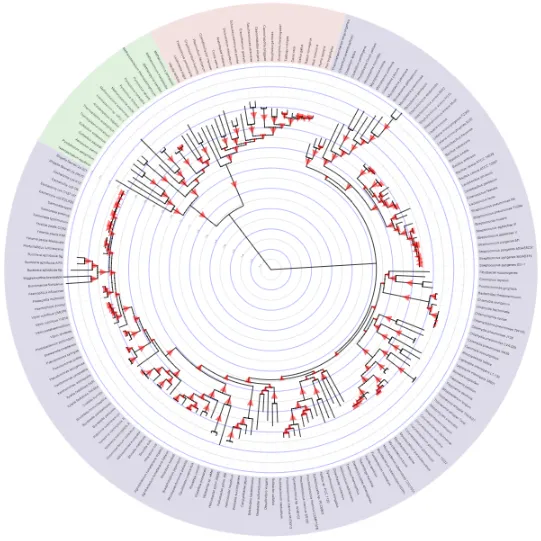
Recent metabolomic research analyzing dozens of fungal strains showed enormous variation in secondary compounds between species and even between individual genetic lines.
This matters because mushrooms are not pharmaceutical tablets. They are living biochemical systems.
Two mushrooms with identical psilocybin percentages may still produce noticeably different experiences, body sensations, onset speeds, emotional tones, or visual characteristics. For years, experienced cultivators and users have discussed this phenomenon anecdotally. Now analytical chemistry is finally beginning to catch up.
The Underground Has Been Watching This for Years
One of the more fascinating aspects of modern psychedelic science is that portions of the mushroom community have, in some ways, outpaced institutional research.
That may sound controversial, but it reflects reality.
The modern mycology underground has spent decades exchanging genetics, documenting observations, comparing species, stabilizing cultivars, preserving wild landraces, and tracking experiential differences between strains long before mainstream medicine showed renewed interest in psychedelics.
Now, several alkaloid testing laboratories across the United States are performing increasingly sophisticated full-spectrum analysis on Psilocybe and Panaeolus specimens, measuring not only psilocybin and psilocin, but also minor alkaloids such as baeocystin, norbaeocystin, and aeruginascin.
This type of analysis is beginning to generate a clearer biochemical fingerprint of individual mushrooms and genetic lines.
For the first time, cultivators are able to compare not only potency, but chemical diversity.
The “Entourage Effect” of Mushrooms
Cannabis researchers popularized the term “entourage effect” to describe how multiple compounds within a plant may interact together rather than acting independently.
Many researchers now suspect psychedelic mushrooms may function similarly.
There is growing scientific interest surrounding whether compounds like baeocystin, aeruginascin, and norpsilocin contribute to the overall experiential profile of mushrooms, either directly or synergistically.
Some compounds appear to interact with serotonin systems differently than psilocybin itself. Others may influence body load, emotional tone, onset characteristics, or perceptual qualities in ways that science still does not fully understand.
Aeruginascin, for example, has attracted interest because of anecdotal reports describing unusually euphoric experiences associated with mushrooms containing the compound.
At the same time, researchers caution that much of this work remains preliminary.
But that uncertainty is precisely the point.
The chemistry of psychedelic mushrooms is still far from fully mapped.
The Problem With Reducing Mushrooms to One Molecule
Modern pharmaceutical development tends to isolate variables.
That makes sense in a clinical environment. A purified molecule is easier to standardize, patent, regulate, and dose consistently.
But fungi are not simple systems.
Reducing mushrooms entirely to synthetic psilocybin may eventually prove similar to reducing coffee down to caffeine alone or cannabis down to isolated THC. The primary compound matters, but it may not tell the whole story.
The mushroom itself may contain a broader pharmacological conversation happening between multiple compounds simultaneously.
And the deeper researchers look, the more chemically complex these organisms appear to become.
A New Era of Mushroom Chemistry
For years, much of this discussion existed only in obscure forums, cultivation circles, private laboratories, and conversations between growers comparing observations.
Now the science is beginning to validate what many in the mycology world have suspected for a long time:
Psilocybe mushrooms are chemically diverse organisms with far more complexity than a single alkaloid percentage can explain.
As analytical technology improves and full-spectrum testing becomes more common, the next decade of mushroom research may move beyond the question of “How much psilocybin is present?”
Instead, researchers may begin asking a far more interesting question:
What makes each mushroom chemically unique?