Psilocybe Mexicana
Psilocybe mexicana is one of the most historically important psychedelic mushroom species, known both for its role in Mazatec ceremonies and its ability to produce underground sclerotia often called magic truffles.
Overview of Psilocybe mexicana
Psilocybe mexicana is one of the most historically significant species within the genus Psilocybe. Native to regions of Mexico and Central America, this small grassland mushroom has played an important role in both traditional ethnomycology and modern scientific research.
The species was first formally described in the mid-20th century by French mycologist Roger Heim, whose work helped introduce these mushrooms to the scientific community. Around the same time, chemical analysis conducted by Swiss chemist Albert Hofmann led to the identification and isolation of the compounds psilocybin and psilocin from Psilocybemushrooms.
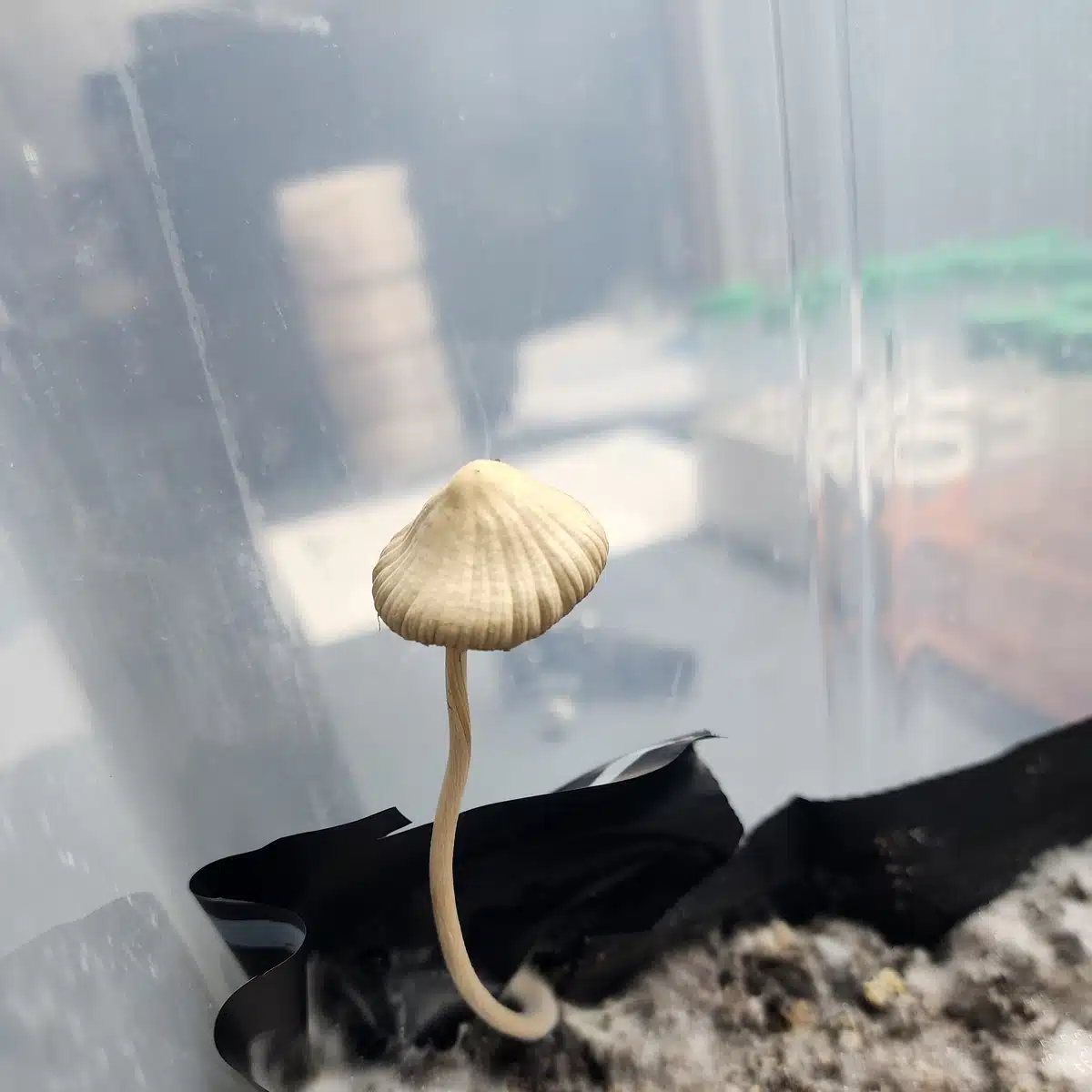
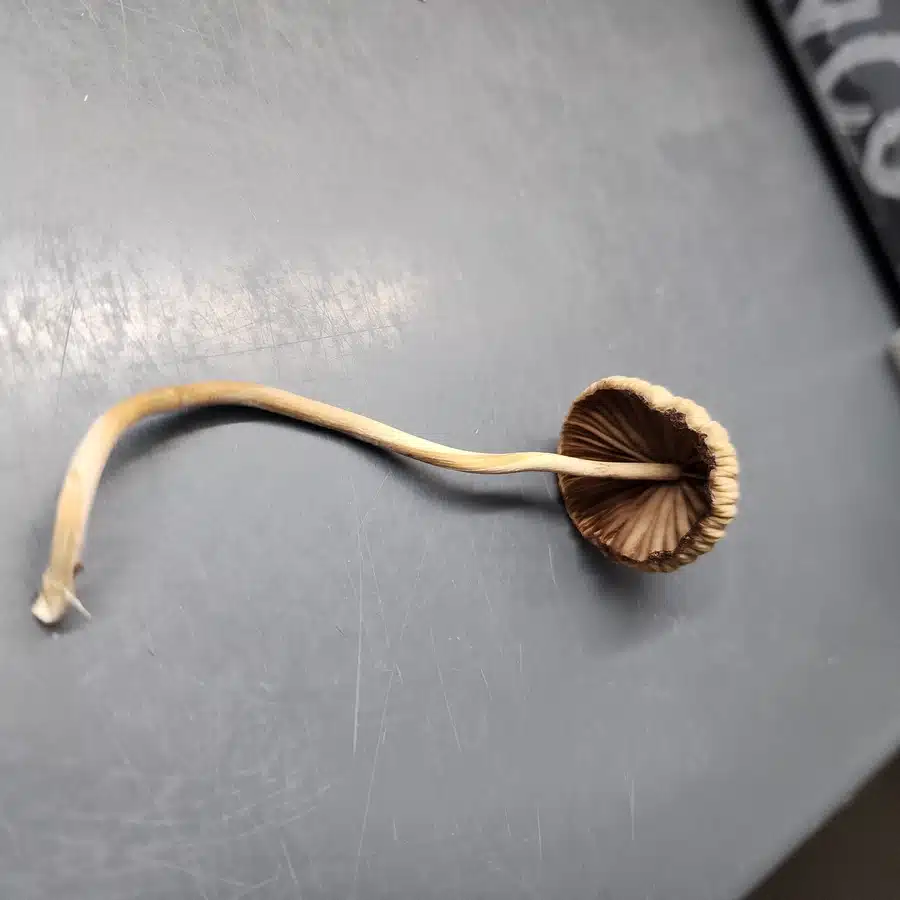
Morphologically, Psilocybe mexicana is known for its small, delicate fruiting bodies, typically featuring slender stems and caramel-colored caps that may darken with moisture. Under microscopic examination, the species produces the characteristic dark purplish-brown spores common among psilocybin-containing Psilocybe species.
Another unusual trait of Psilocybe mexicana is its ability to produce sclerotia, dense underground structures formed by compacted mycelium. These formations — sometimes referred to as philosopher’s stones or magic truffles — serve as nutrient reserves for the fungus and represent an alternative survival strategy within the organism’s lifecycle.
Today, Psilocybe mexicana remains one of the most widely studied species within the genus, valued by researchers and mycologists for its historical importance, unique biology, and role in expanding scientific understanding of psilocybin-producing fungi.

The Mazatec Tradition and María Sabina
Long before Western science began documenting psychedelic mushrooms, Psilocybe mexicana was already deeply woven into the spiritual traditions of Indigenous communities in southern Mexico. Among the Mazatec people of Oaxaca, these mushrooms were known as niños santos — “the little saints” — and were used in ceremonial healing rituals intended to provide insight, guidance, and spiritual clarity.
One of the most widely recognized figures associated with this tradition is María Sabina, a Mazatec curandera (healer) whose ceremonial practices brought global attention to sacred mushroom traditions in the mid-20th century. Sabina conducted nighttime healing ceremonies, often referred to as veladas, in which participants consumed mushrooms while prayers and chants guided the experience. These rituals were not recreational but were viewed as a sacred means of seeking healing, knowledge, and connection with the spiritual world.
In the 1950s, the work of researchers and explorers introduced the Western world to these traditions, eventually leading to scientific investigation into the active compounds found in psilocybin mushrooms. While this discovery sparked widespread curiosity and research, it also brought significant cultural disruption to the Mazatec community, as outside interest in the ceremonies grew rapidly.
Today, the story of Psilocybe mexicana and María Sabina remains one of the most important chapters in the history of ethnomycology. Her legacy serves as a reminder that long before modern laboratories and chemical analysis, Indigenous cultures had already developed sophisticated relationships with the natural world and the fungi that inhabit it.
Sclerotia Formation in Psilocybe mexicana
One of the more unusual biological traits of Psilocybe mexicana is its ability to produce sclerotia, dense underground structures formed from compacted mycelium. These hardened masses act as nutrient reserves for the fungus, allowing it to survive periods of environmental stress such as drought or seasonal change.
Over time, these sclerotia have become widely known by the nickname “philosopher’s stones,” and in modern culture they are often referred to as magic truffles. While they are sometimes mistaken for traditional mushrooms, sclerotia are actually a different stage of fungal growth, forming below the surface as the mycelium consolidates stored energy into small, firm nodules.
Several species within the genus Psilocybe are capable of producing sclerotia, though the most well-known examples include Psilocybe mexicana and Psilocybe tampanensis. These species have become closely associated with the truffle phenomenon due to their consistent formation of sclerotia under favorable conditions.
From a biological perspective, sclerotia represent an adaptive survival strategy. By concentrating nutrients into dense underground structures, the fungus is able to endure unfavorable environmental conditions while retaining the resources necessary to resume growth when conditions improve.
For mycologists and researchers studying fungal development, the sclerotia-forming behavior of Psilocybe mexicanaprovides a fascinating example of how different life strategies can evolve within the same genus. When compared with related species like Psilocybe tampanensis, these variations help illustrate the remarkable diversity present within sclerotia-producing psilocybin mushrooms.
Microscopy Characteristics of Psilocybe mexicana
When examining Psilocybe mexicana under the microscope, the species reveals many of the microscopic traits typical of the genus Psilocybe, while its macroscopic morphology offers several distinguishing characteristics when compared with related species.
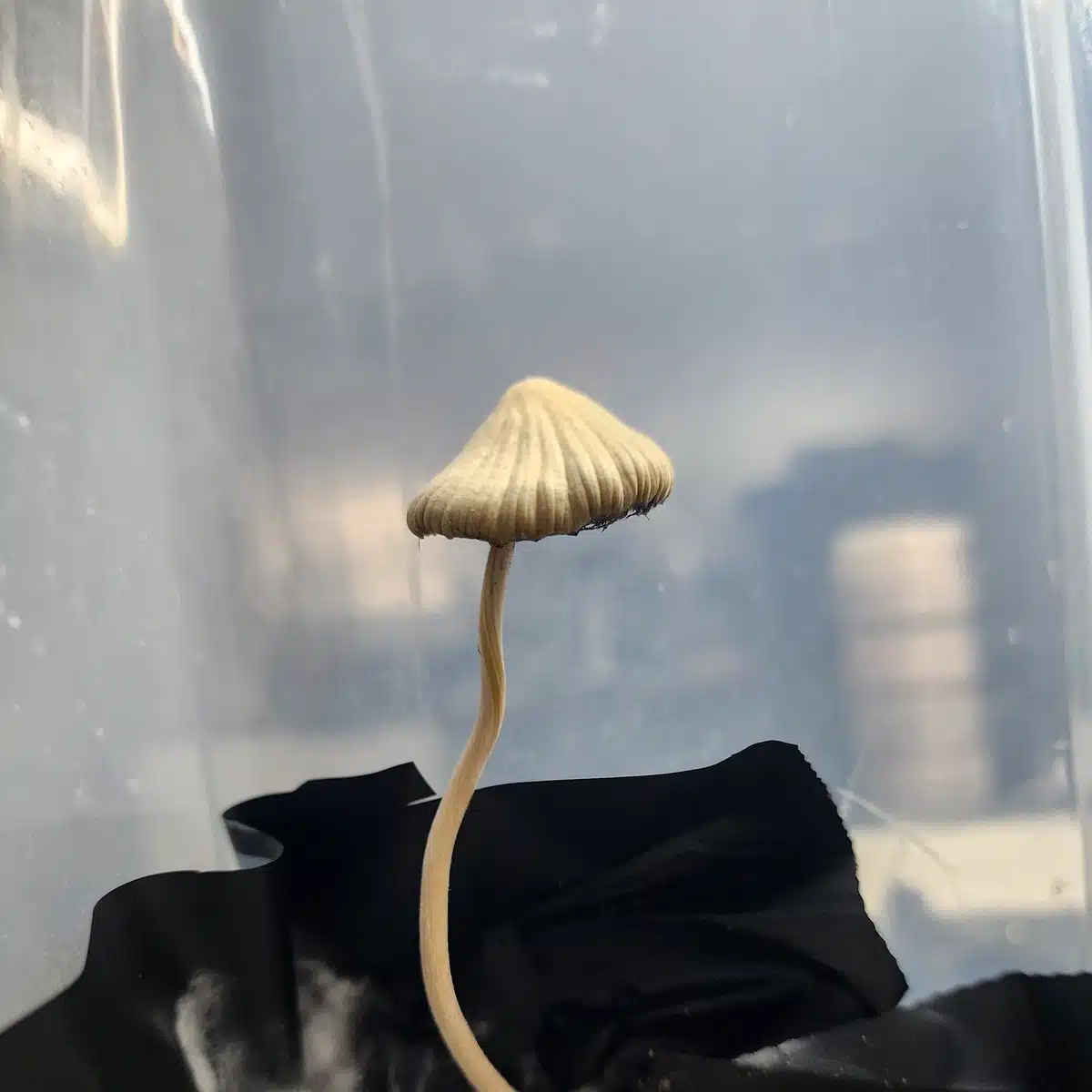
In contrast to species like Psilocybe tampanensis, Psilocybe mexicana often develops larger, more pronounced caps that take on a distinct umbrella-like shape as they mature. One particularly recognizable feature observed in many mexicana specimens is the presence of radial striations running from the center of the cap toward the margin. These fine lines create a segmented appearance reminiscent of pizza slices, giving the cap a delicate, almost translucent quality when viewed closely.
Microscopically, the spores of Psilocybe mexicana are typically ellipsoid in shape with the characteristic dark purplish-brown coloration common among psilocybin-producing species. Under high magnification, the spores display a smooth surface and visible germ pore, an identifying feature used in fungal taxonomy and species differentiation.
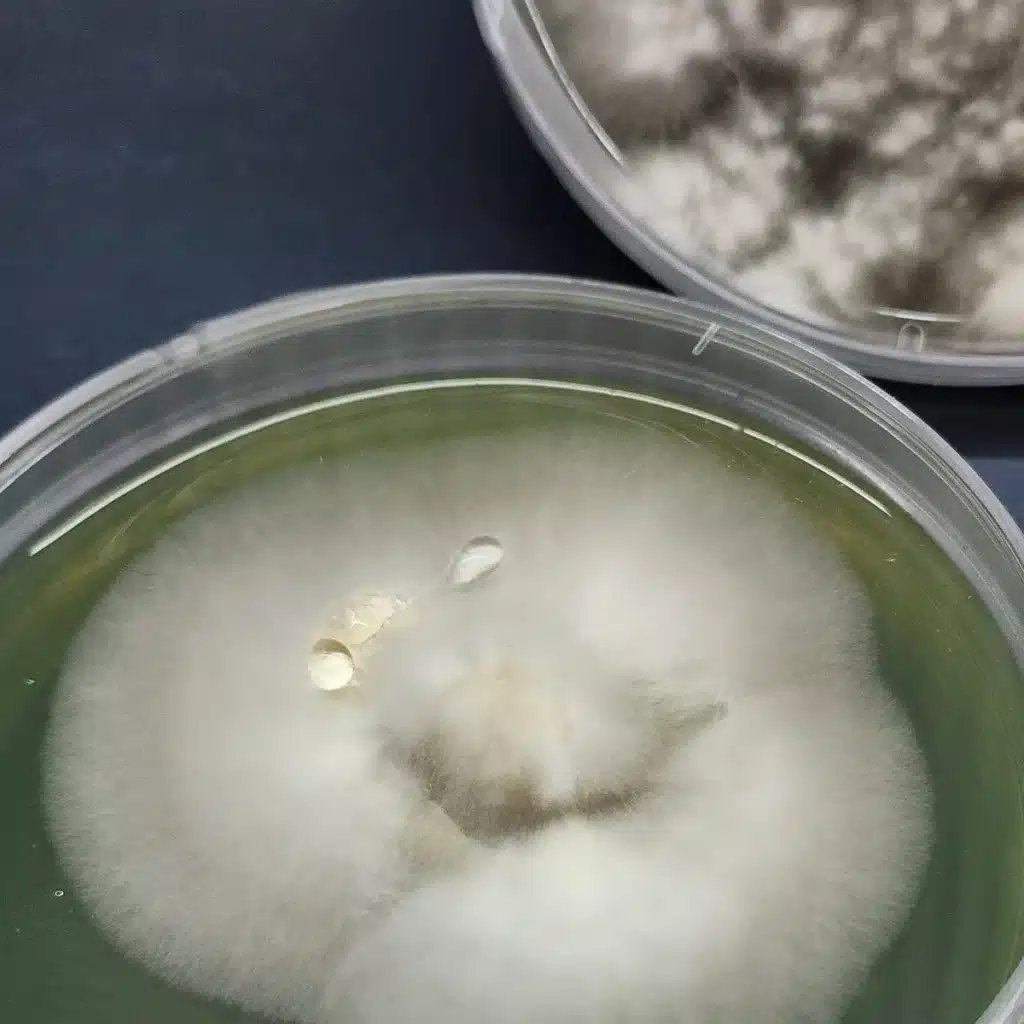
The specimen maintained within the Basidium Equilibrium collection originates from Coyopolan, Mexico, and has displayed particularly interesting developmental traits during observation. In this lineage, sclerotia formation occurs as very small, bead-like structures within the substrate, rather than the larger nodules commonly associated with tampanensis. These tiny formations resemble clusters of compact mycelial beads scattered throughout the growth medium.
Observations like these help illustrate the subtle but meaningful differences that can exist between closely related species. By combining macroscopic characteristics such as cap morphology with microscopic spore analysis, mycologists are able to build a clearer understanding of how individual Psilocybe species express their genetics and adapt to their environments.
Habitat and Natural Distribution
In the wild, Psilocybe mexicana is most commonly found in subtropical and highland grassland environmentsthroughout parts of Mexico and Central America. The species tends to grow in nutrient-rich soils, often appearing in grassy meadows, pasturelands, and disturbed soils where organic material is abundant.
Unlike many other Psilocybe species that favor wood debris or forest floors, Psilocybe mexicana is typically associated with grassy habitats and open landscapes, where seasonal rains create the moist conditions necessary for fungal growth. These mushrooms often appear following periods of rainfall, emerging quietly among grasses where their small size and caramel-colored caps help them blend naturally into the surrounding environment.
Historically, Psilocybe mexicana has been documented in several regions of southern Mexico, particularly within the mountainous areas of Oaxaca and neighboring states where Indigenous Mazatec communities have long recognized and used the species in ceremonial traditions. These regions provide the ideal ecological balance of moisture, soil composition, and elevation that supports the life cycle of this delicate grassland mushroom.
Modern observations and collections continue to show that Psilocybe mexicana thrives in warm, humid climates with seasonal rainfall patterns, reinforcing its classification as a species adapted to subtropical highland ecosystems. As researchers and citizen scientists continue to document specimens across these regions, the known range and ecological behavior of the species becomes increasingly well understood.
For mycologists studying Psilocybe diversity, the natural habitat of Psilocybe mexicana provides valuable insight into how environmental factors influence the growth, distribution, and evolutionary development of psilocybin-producing fungi.