Woodlovers of the Pacific Coastline
Psilocybe Cyanescens
Psilocybe Cyanescens
Quick ID
Common names: Wavy Cap, “Cyanescens”
Family Hymenogastraceae
Notable trait
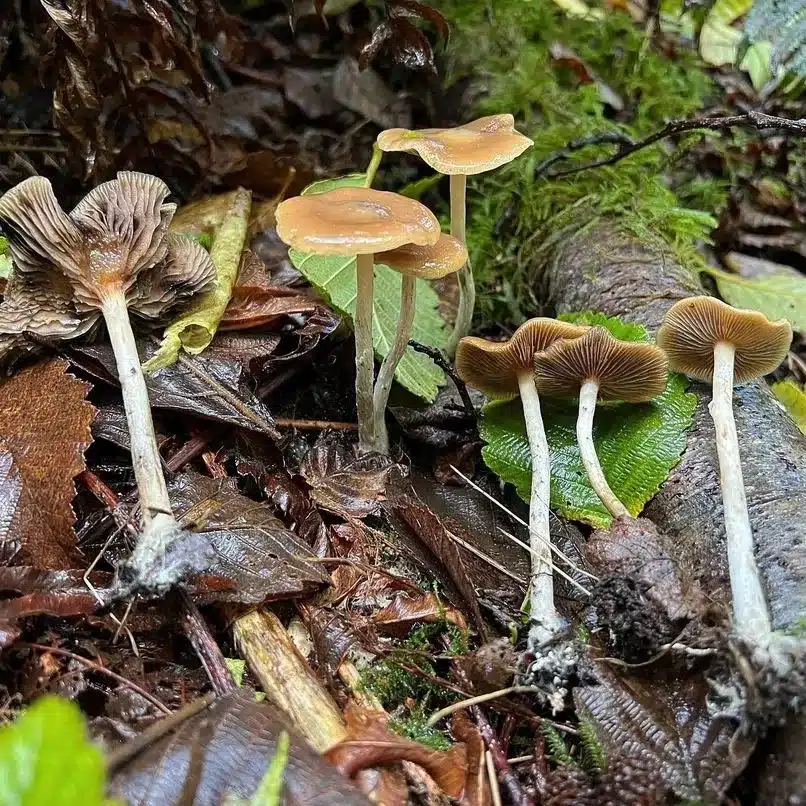
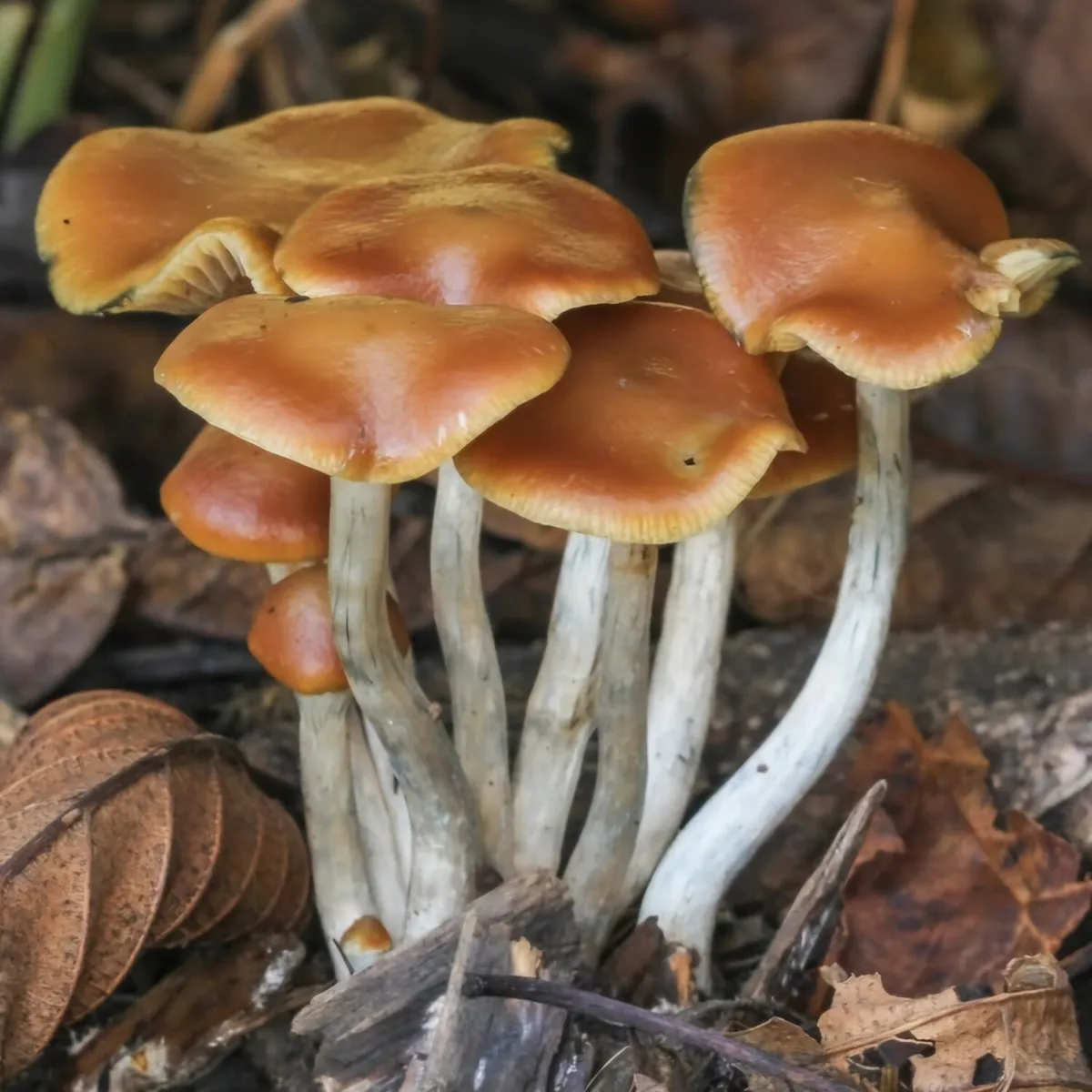
Strong blue bruising + wavy cap margin as caps expand
Ecology
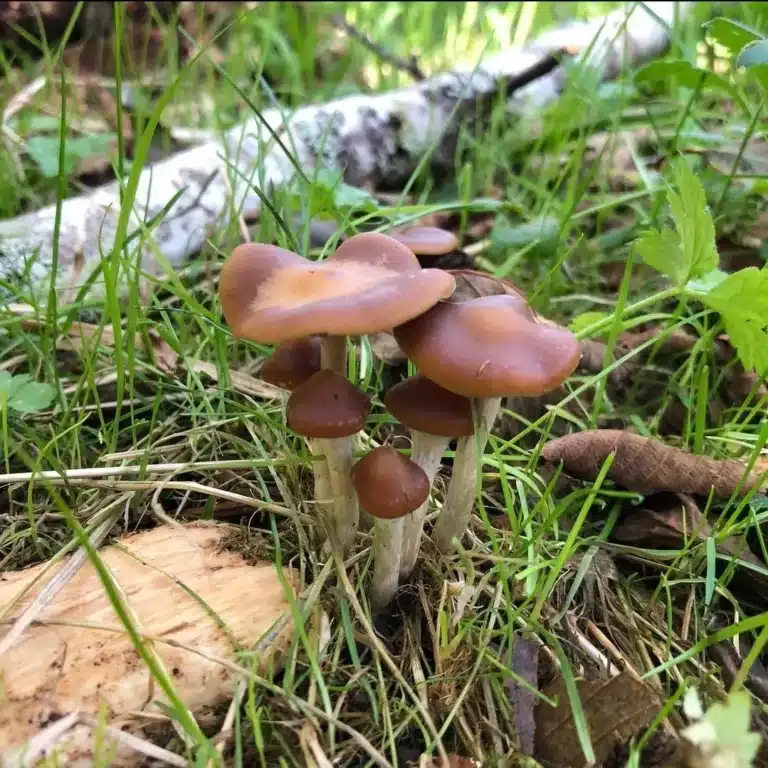
Saprotrophic, lignin/wood-debris associated, commonly in wood chips / mulched beds.
Wavy cap margin
developing with expansion (classic “wavy cap” look)
Habitat & Range
Typical Habitat
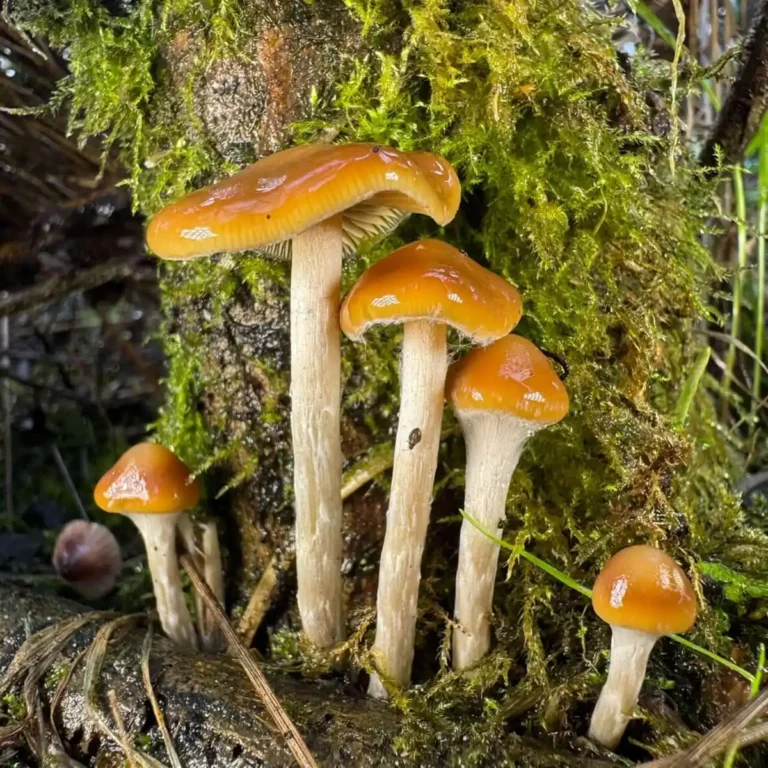
Psilocybe cyanescens is most commonly associated with wood-rich substrates, particularly areas containing decomposing wood chips and other lignin-heavy debris. It is frequently observed in landscaped environments, such as mulched beds, where moisture and organic material accumulate naturally.
Shaded locations with consistent moisture tend to support its appearance, especially during cooler, wetter periods.
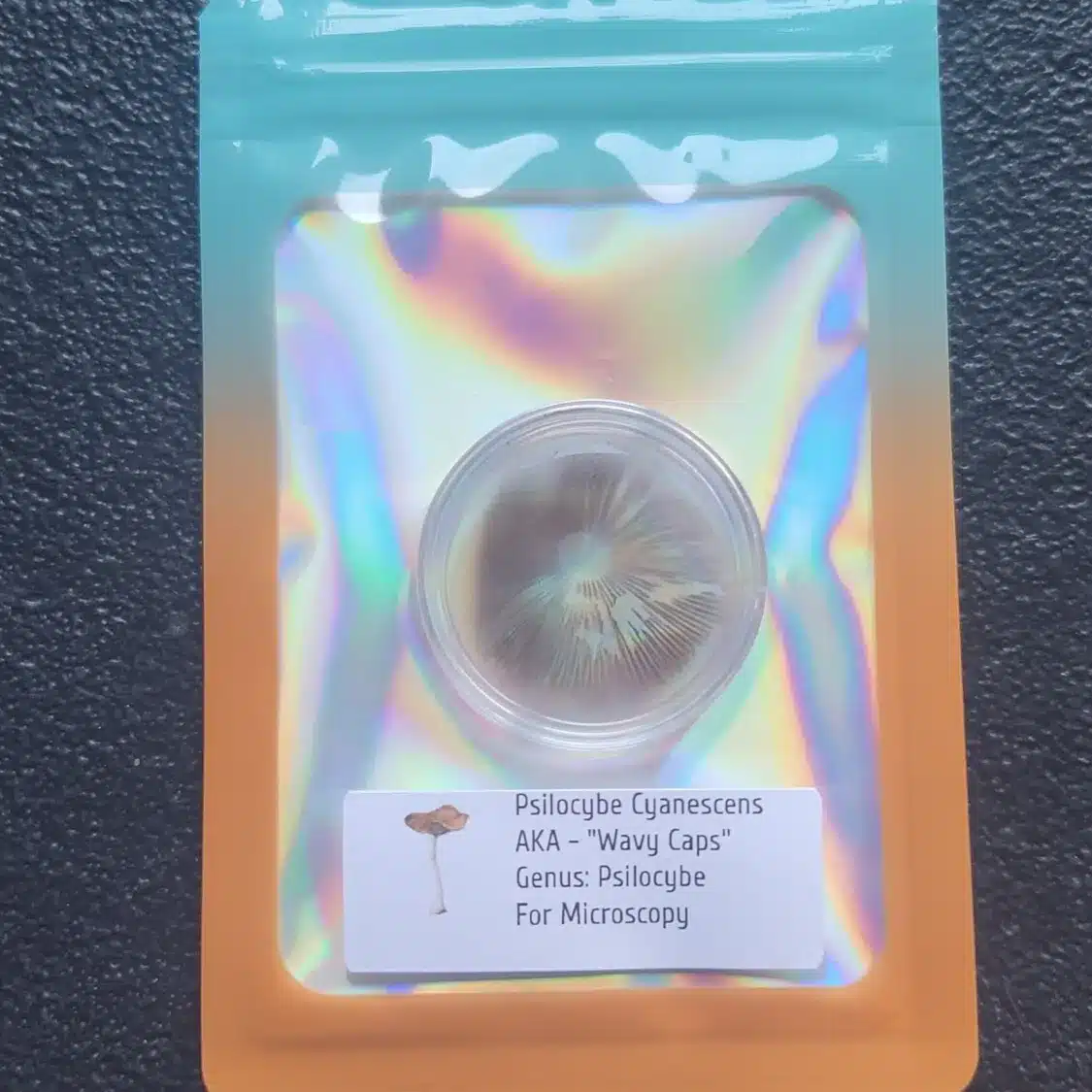
Spore Print & Microscopy
The spore print of Psilocybe cyanescens is dark purplish-brown, a defining trait of the genus and a critical feature used in taxonomic differentiation.
Safety & Lookalikes
Small, wood-associated mushrooms can be visually deceptive. Psilocybe cyanescens has historically been confused with Galerina marginata, a toxic species that can occur in similar environments.
One commonly cited distinguishing feature at the genus level is the spore print color:
Psilocybe species typically produce a dark purplish-brown print, while Galerina and similar genera tend toward rusty or cinnamon-brown tones.
Accurate identification relies on careful, multi-trait evaluation rather than any single feature.